
Waterproofing
Basement water on a 1970s Clarksville block wall
Clarksville, TNMontgomery CountyResidential2026-03-22
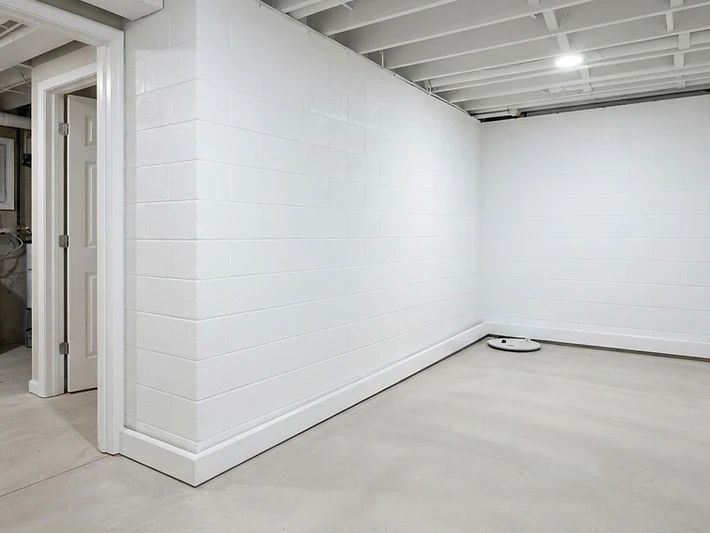
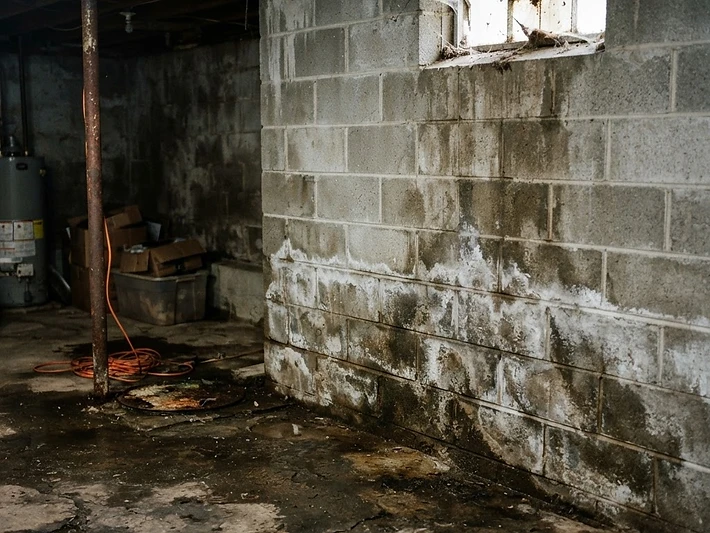
Drag to compare before and after
The problem
Water seeping through block walls and the floor joint every spring — solved by managing the water outside first, then draining and sealing inside.
What the homeowner noticed
A damp, stained band along the bottom of the basement wall every spring, and a white powdery residue that kept coming back. Cardboard boxes stored against the wall were ruined.
What Marty found
Classic hydrostatic pressure. The block wall was wicking water from saturated clay outside. The gutters discharged within two feet of the foundation and the grade sloped toward the house along the whole back wall.
What we recommended
Fix the water above ground first — extend downspouts, regrade the back of the house — then install interior drainage and a sump system with wall sealing to handle what still gets through.
The result
Downspouts were extended and the back grade was rebuilt to fall away from the house. Inside, a perimeter drainage channel was cut along the footing, tied to a sump pit and pump, and the block walls were cleaned and sealed with a waterproof coating.
Why this happens
The white powdery residue is efflorescence — mineral salts left behind when water moves through concrete block and then evaporates. It's harmless in itself, but it's proof that water is traveling through the wall.
No coating will stop water that's being pushed by hydrostatic pressure. The reliable fix is to reduce the pressure from outside and give whatever still arrives a path to a sump instead of your floor.
See something that doesn't look right?
Send Marty a picture.
Crack in the brick? Uneven floor? Water in the crawl space? Sinking concrete? Send a few photos and tell Marty what you're seeing. No pressure — just a straight answer from someone local.

