
Foundation Cracks
Should I Worry About Cracks in My Brick?
Martin "Marty" Miller5 min read2026-05-12
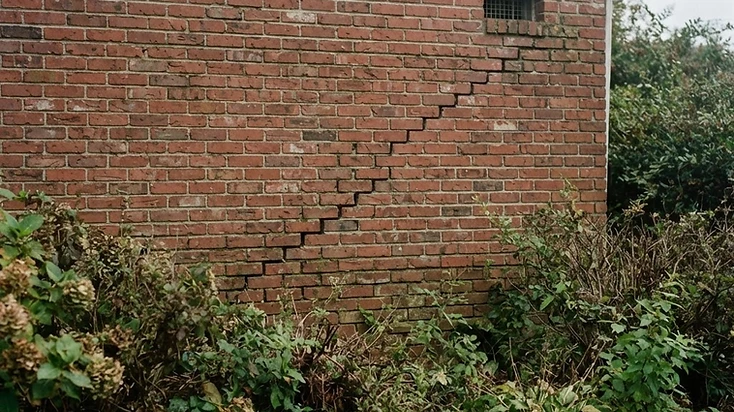
First, the good news
Most cracks in brick are cosmetic. Brick moves with temperature, mortar shrinks as it cures, and a house that's forty years old will have some cracking somewhere. That's normal.
What matters isn't whether there's a crack. It's what shape it makes.
The three patterns
Vertical cracks
A straight crack running up through a mortar joint, usually near a corner or where an addition meets the original house. These are often movement or thermal cracks. If it's hairline and hasn't changed in years, it's usually nothing to act on.
Stair-step cracks
This is the one to pay attention to. The crack travels diagonally, following the mortar joints like a staircase. It happens because the mortar is the weakest point in the wall — when the foundation below moves, the brick doesn't break, the mortar does.
A stair-step crack almost always means something has moved below grade.
Horizontal cracks
A horizontal crack in a foundation wall is a different animal entirely. It usually indicates lateral pressure — soil or water pushing against the wall. This one deserves attention quickly.
How to tell if it's active
This is the practical test I give homeowners:
- Take a photo with a ruler or a coin next to the widest point
- Write the date on it
- Check it again in six months and compare
If it hasn't changed, you can keep monitoring. If it's wider, it's active and worth investigating.
What I'd check
When I look at a brick crack, I'm not looking at the crack. I'm looking at:
- The grade around the house and where the downspouts discharge
- The crawl space or basement below that corner
- Whether doors and windows near the crack operate normally
- Whether the crack is wider at the top or the bottom
Nine times out of ten, the answer to "should I worry?" comes down to drainage, not structure.
The honest answer
If your crack is vertical, hairline and stable, you probably don't need to spend money. If it's a stair-step pattern, or if it's changed in the last year, it's worth having someone look at it — and it's worth having someone who'll tell you if the answer is "leave it alone."

